Teatime Gravy: Why Your Sunday Roast Belongs at Four O'Clock
There is a particular sort of Sunday that begins with an alarm, and I would like to formally object to it. The table is booked for twelve. Which means parking at ten to. Which means leaving at half eleven. Which means the morning has been carved up like a joint of beef before it has even properly started: a walk rushed, the paper unread, the dog gazing at you with quiet reproach as you reach for the car keys.
I have done the noon roast for years. It is fine. It is also, I have slowly come to believe, the wrong roast. The genuinely great British Sunday meal happens four hours later, at four o'clock, when the light has gone amber and there is absolutely nowhere else you are expected to be.
Why noon is the worst seat in the house
Think about what a midday roast actually asks of you. You eat a plate of beef, potatoes and three veg at a speed normally reserved for a train platform sandwich, because the table is needed back at half one. You are home by two, uncomfortably full, and the entire afternoon stretches ahead in a fog of gravy and regret. By six you are hungry again, but it is too late to cook properly, so it is toast and a sense of anticlimax.
That is not a day of rest. That is a catering job with a parking problem.
The morning is yours again
Move the roast to four and the whole shape of Sunday changes. You wake up. You have coffee. You go for a proper walk in that crisp November air, the one that smells of wet leaves and bonfire smoke two streets away. You might even do a small, virtuous bit of pottering — peeling the spuds early, getting the joint out of the fridge so it comes to room temperature. Then, around half one, you have a biscuit and nobody says anything about it.
By the time you start cooking properly, you are hungry. Actually hungry, not politely peckish. That alone is worth the shift.
Yorkshire puddings: the case for teatime
The real argument, though, is chemistry. Yorkshire pudding batter wants time. Thirty minutes minimum, overnight ideally, in the fridge with a pinch of salt, so the flour hydrates and the gluten relaxes. A noon roast never gets that, because you were still in the shower at ten.
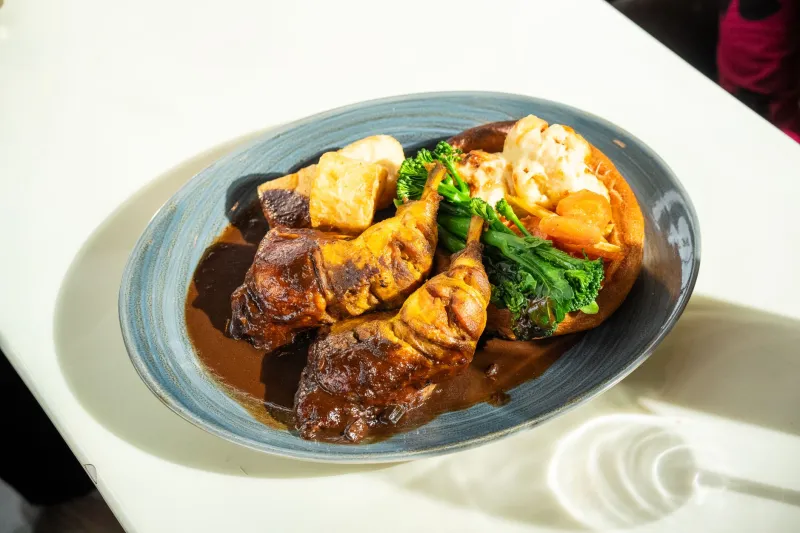
A four o'clock roast gets it. And a rested batter, poured into fat that is genuinely smoking hot — dripping if you have it, rapeseed if you do not — in a tin that has had a good ten minutes at 220C fan, will climb the sides of the tin like it has been personally insulted. Then you leave the door shut for twenty-five minutes and do not, under any circumstances, peek. The result is crisp at the base, hollow in the middle, and structurally capable of holding half a pint of gravy.
There is also the matter of the oven being free. At noon you are juggling. At four you have been roasting slowly all afternoon, the potatoes have had their par-boil and their shake in the pan, and everything lands on the table at the same time because you were not fighting the clock.
The four o'clock timetable
- 1.30pm — spuds peeled and sitting in cold water, carrots and parsnips prepped, batter out of the fridge to take the chill off.
- 2.15pm — joint in. Low and slow if it is pork shoulder or lamb; a hotter, shorter blast for beef if you like it pink.
- 3.15pm — potatoes par-boiled, shaken in the colander until floury at the edges, into hot fat.
- 3.45pm — oven up to full whack, pudding tin in to heat, greens on.
- 3.55pm — batter in. Door shut. Nobody speaks.
- 4.20pm — gravy made in the roasting tin, on the hob, with a splash of whatever is open.
- 4.30pm — plates out, everyone sitting down, the good mustard on the table.
The long table, the second bottle
A four o'clock roast is not a meal, it is an evening. There is no rush to clear because nobody has anywhere to go. You sit. Someone opens a second bottle. The conversation moves from football to a cousin's new kitchen extension to whether the sprouts were better last year. The plates sit in front of you for a while and nobody minds.
And crucially, you do not need supper. Maybe a bit of cheese and a few crackers at nine, a square of something dark, a cup of tea. That is a far more civilised end to a weekend than a second full meal you did not really want.
Leftovers, handled properly
A late roast also solves the leftovers problem, because you are not trying to eat again four hours later. Everything goes in the fridge with intent.
- Cold potatoes and sprouts become Monday's bubble and squeak, fried hard in a little beef dripping, with a fried egg on top and a shake of Worcestershire sauce.
- The carcass goes in the slow cooker overnight with an onion, a carrot and a bay leaf. Tuesday's soup, essentially free.
- The last of the meat and gravy get chopped small, thickened with a spoon of flour and topped with puff pastry for a proper little pie on Wednesday. A pie made from a roast is one of the great quiet pleasures of British home cooking.
- Spare Yorkshires freeze beautifully and reheat in a hot oven for four minutes. They also, controversially, make an outstanding vehicle for golden syrup.
Nothing binned. That is the whole point. The Sunday roast was invented as a way of being sensible with an expensive piece of meat across several days, and the four o'clock version lets you do it properly instead of eating cold beef at eleven at night because you ran out of ideas.
So: cancel the noon table. Take the later slot. The beef will be rested, the batter will be patient, and the light through the window will be doing something rather lovely by the time the gravy boat goes round.