Three Jars on the Windowsill: A November Afternoon of Chutney, Steam and Good Intentions
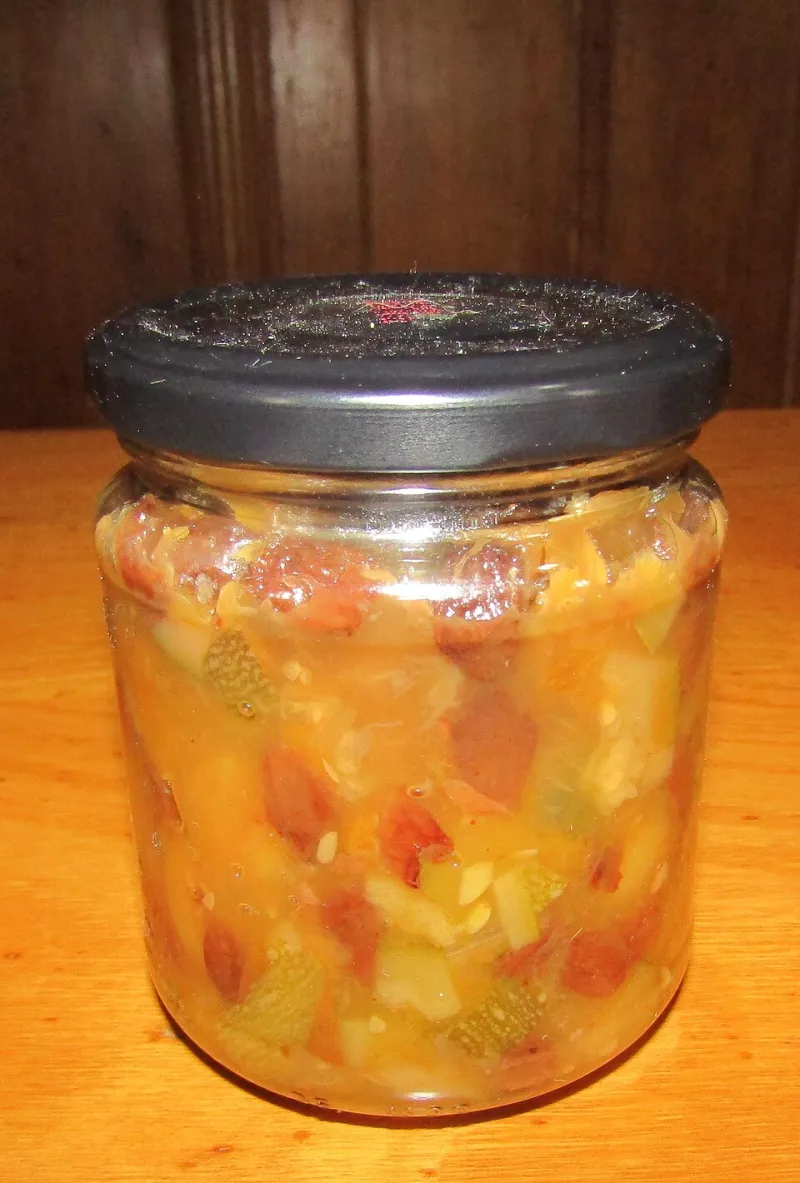
Photo: Kolforn (Kolforn) I'd appreciate if you could mail me ([email protected]) if you want to use this picture out of the Wikimedia project scope. This file is licensed under the Creative Commons Attribution-Share Alike 4.0 International license. Yo
There is a particular kind of November afternoon that asks for nothing more than a pan, a wooden spoon and the radio on low. The light goes early, the garden gives up its last windfalls, and somewhere at the back of the fruit bowl a few pears are sitting there, defiantly rock-hard, refusing to ripen out of sheer spite.
This is the point where most of us think about preserving and then quietly don't. Vats of boiling water, mysterious jars, the fear of poisoning your nearest and dearest with a rogue botulism spore — it all sounds like a lot for a Tuesday. But small-batch chutney is not that. Three jars, maybe four. An hour of chopping with a podcast on. A pan that bubbles away while you get on with something else. And then, a fortnight later, a jar that makes a cheese sandwich feel like an occasion.
It is, genuinely, one of the most quietly satisfying things you can do in a kitchen in the back half of the year.
Why small batches beat the big pan
The old preserving books assume you own an orchard and a scullery. You probably don't. You probably own a medium saucepan, a cutting board, and a vague sense that you should be using up the apples before they turn.
Small batches suit that reality. They fit on a normal hob, they cool quickly, and they don't commit you to forty jars of the same thing. If a recipe flops — and occasionally one does — you've lost three jars' worth, not an entire harvest. You can also tweak as you go: more chilli, less sugar, a splash of something sharp at the end. Chutney is forgiving like that. It is far less fussy than jam, which punishes you for looking away.
And there is the smell. Fifteen minutes in, the kitchen is doing that thing — vinegar, sugar, spice, fruit collapsing into something darker and richer. It smells like a Sunday in a house where someone cares. That alone is worth the price of a bag of onions.
The sterilising routine, minus the drama
Every chutney article feels obliged to be ominous here. It doesn't need to be. You need clean jars, hot chutney, and a decent seal. That's it.
Wash your jars and lids in hot soapy water, rinse well, then stand them upside down on a clean tea towel in an oven set to about 120°C for fifteen minutes while the chutney finishes. Lids can go in too, as long as they have no plastic inserts that might sulk. Fill the jars while both are still hot, right to the top, pressing down to remove air pockets. Wipe the rims, seal, and leave to cool undisturbed overnight.
You'll hear the lids pop as they cool. That little click is one of the small, unreasonable pleasures of the kitchen — proof that you've made something that will keep, and keep well.
The windfall apple chutney
The workhorse. Any apples will do, including the bruised ones you'd never put in a crumble. Roughly a kilo, peeled if the skins are tough, chopped small. One large onion, softened first in a little oil. Then 200g of soft brown sugar, 300ml of cider vinegar, a teaspoon of mustard seeds, a thumb of grated ginger, a pinch of chilli flakes, and a handful of raisins if you like that kind of thing.
Bring it to a simmer, then let it go low and slow for about an hour, stirring now and then so it doesn't catch. It's ready when you can drag a spoon through and the gap stays put for a moment. Pot it hot. This is the one that will disappear fastest — sharp, sweet, excellent with cold pork, a sharp cheddar, or a sausage roll you're pretending you didn't buy.
The green tomato chutney
If you grow tomatoes, you know this one. The ones that never ripened and are now sitting on a windowsill looking sorry for themselves. Roughly 800g, chopped. One onion. 150g of demerara sugar, 250ml of malt vinegar, a good teaspoon of salt, a teaspoon each of ground ginger and mustard powder, and a small handful of sultanas.
Same method: simmer, stir, wait. This one wants a little longer — an hour and a quarter, maybe — and it benefits from being left a bit chunky. It's tangy and bright in a way that cuts through anything rich. A spoonful on a baked potato with grated cheese is, frankly, the correct November lunch.
The hard pear chutney
The quiet one. Pears that never softened, peeled and chopped into smallish chunks. 600g or so. One onion, finely chopped. 100g of soft dark sugar, 200ml of white wine vinegar, a cinnamon stick, four cloves, a few black peppercorns tied in a bit of muslin or a tea strainer, and a squeezed lemon.
Simmer gently until the pears are tender and the liquid has gone syrupy — forty-five minutes to an hour. Fish out the spices before potting. This one is the prettiest of the three and the most giftable: golden, sticky, faintly spiced, the sort of thing that makes people ask what's in it.
The patient fortnight
Here's the bit nobody tells you loudly enough: chutney straight from the pan is not at its best. It's sharp, a bit raw, the vinegar shouting over everything else. It needs a fortnight, minimum, ideally a month, in a cool dark cupboard to settle down and become itself.
Write the date on the lid with a marker. Leave it alone. Then, one grey afternoon, open it, and find that it has become something softer, rounder and considerably better than the sum of its parts. That wait is not a chore. It's the whole point.
And then, hand one to someone
Once they're ready, you will find you have more jars than you strictly need. This is the good part. A jar pressed into a neighbour's hand at the door. One slipped into a bag before a friend leaves. One taken to a Sunday lunch, where it sits on the table next to the mustard and quietly does the most.
No label printer required. A strip of masking tape and a biro will do. It says something better than a shop label ever could: that you had an afternoon, a bit of a glut, and you thought of them.