Leave the Frying Pan Alone: The Midweek Beef Stew That Quietly Does the Most
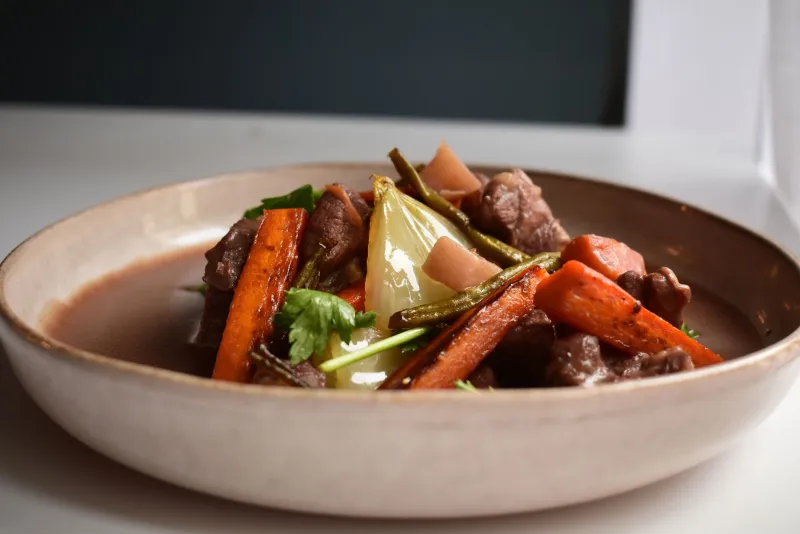
There are evenings in November when the idea of dinner is far better than the reality of making it. You want something dark, gravy-soaked and generous. You do not want to stand at the hob browning cubes of beef in batches while the kitchen fills with smoke and the washing-up pile grows a second head.
This is where the no-brown stew earns its place. It is not a compromise. It is not a sad, pale cousin of the real thing. It is a proper winter supper with a deep, savoury gravy, beef that falls apart under a spoon and barley that swells into something close to risotto. And it skips the fiddly frying step entirely.
Why skipping the sear is not a shortcut too far
Yes, browning meat adds flavour. The Maillard reaction is real, and it is lovely. But it is not the only route to a rich stew. When you cook raw beef slowly in stock with onions, root vegetables, tomato purée and a little Worcestershire sauce, you are building flavour in a different way: through time, gentle heat and the natural gelatine in cuts like shin and chuck. That gelatine melts into the liquid and gives the gravy a lip-sticking quality that no amount of quick frying can fake.
Pearl barley does quiet heavy lifting too. It releases starch as it cooks, thickening the sauce without flour or cornflour. A teaspoon of Marmite, if you have it, adds a savoury depth that makes people ask what you put in it. A splash of vinegar at the end wakes the whole pot up. None of this requires a frying pan.
There is also the small matter of mess. No oil spitting across the hob. No trying to deglaze a hot pan while a toddler or a dog or a hungry housemate circles the kitchen. You chop, you tip, you stir once, you put the lid on. That is the sort of midweek cooking I can get behind.
The base recipe: a proper no-fry beef and barley stew
This serves four to six, depending on how greedy you are and whether you serve it with mash. It freezes well, and it is even better the next day.
You will need:
- 1kg beef shin or chuck, cut into rough 3cm chunks
- 2 onions, sliced
- 2 carrots, cut into thick coins
- 2 parsnips or a small swede, cut into chunks
- 100g pearl barley, rinsed
- 2 tbsp tomato purée
- 1 tbsp Worcestershire sauce
- 1.2 litres beef stock
- 2 bay leaves and a few sprigs of thyme
- 1 tsp Marmite (optional, but good)
- 1 tbsp cider vinegar
- Salt and black pepper
- A small handful of parsley, chopped, to finish
Heat your oven to 160C/140C fan/gas 3. In a large casserole dish, soften the onions in a little oil over a medium heat for about eight minutes, until they are soft and slightly golden at the edges. You are not browning the beef, but you are giving the onions a head start.
Stir in the tomato purée and cook for a minute. Add the beef, carrots, parsnips, barley, stock, Worcestershire sauce, Marmite if using, bay leaves and thyme. Season with a good pinch of salt and plenty of pepper. Bring it just to a simmer on the hob, then cover with a lid and slide it into the oven for two and a half to three hours.
Check it once or twice. If it looks dry, add a splash of hot water. If it looks watery near the end, take the lid off for the last twenty minutes. The beef should be tender enough to cut with a spoon, and the barley should be plump and soft. Stir through the cider vinegar and parsley, then taste and adjust the seasoning. Rest it for ten minutes before serving.
Four variations from the fridge door
Stout and mustard. Replace 300ml of the stock with stout and stir in two teaspoons of English mustard before it goes in the oven. Add a chopped leek with the onions. The gravy turns dark and slightly bitter in the best way.
Smoked paprika and butter bean. Add two tablespoons of smoked paprika with the tomato purée, then tip in a drained tin of butter beans for the last half hour. Use sweet potato instead of parsnip if that is what you have. It is a little less British, a little more brilliant.
Mushroom and thyme. Soak a handful of dried porcini in hot water and add them, plus their soaking liquid, with a punnet of sliced chestnut mushrooms. Leave out the Marmite and add an extra splash of Worcestershire sauce. This one tastes disproportionately expensive.
The Sunday-leftovers remix. Stir in leftover roast potatoes, carrots or greens for the final fifteen minutes, just until they are hot. Serve with a spoonful of horseradish cream on top. It is not quite a roast dinner, but it is close enough for a Tuesday.
The bits that matter more than browning
Use a cut with plenty of collagen — shin is superb, chuck is reliable, and lean stewing steak will disappoint you. Buy the best stock you can justify, or use a good stock pot. Do not rush the oven time; two hours will give you cooked beef, but three will give you stew. And season at the end, not just at the start, because the liquid reduces and concentrates as it cooks.
Most of all, give it a night in the fridge if you can. Stew eaten the next day is one of the quiet luxuries of home cooking. The barley softens further, the gravy thickens, and the whole thing tastes like you spent far longer on it than you did.
Serve it with mashed potato, a hunk of buttered bread or just a spoon and a bowl. The frying pan can stay in the cupboard.