The Icing Is Never Level: In Praise of the Village Hall Cake Table
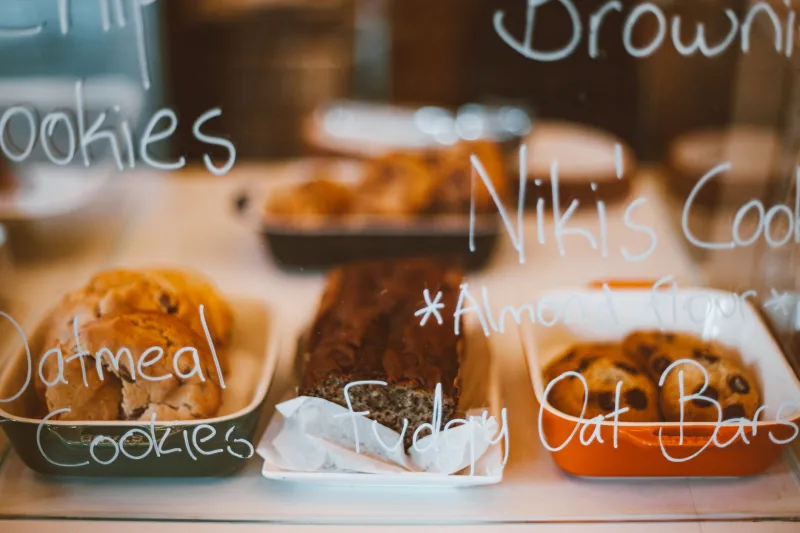
There is a certain kind of bakery that does not have a website. It opens for two hours on a Saturday morning, smells faintly of urn coffee and floor polish, and sells its wares from a trestle table covered in a slightly tired gingham cloth. The queue is usually beside a noticeboard advertising a bring-and-buy sale and a pilates class. The cakes are cut unevenly. The labels are handwritten. And somehow, it is often the best baking you will eat all month.
We are, as a country, quite good at being sniffy about the church hall cake stall. It gets filed under quaint, or worthy, or something to support out of duty rather than desire. That feels like a mistake. A polished patisserie can give you a perfect choux bun, but it cannot give you a slice of lemon drizzle handed over by someone who knows your nan's name. The village hall cake table is not competing on precision. It is competing on something much harder to fake: generosity.
A different kind of confidence
Most commercial bakeries are in the business of consistency. Every flapjack the same size, every cupcake domed to the millimetre. The church hall stall has no such ambitions. One Victoria sponge will be a little sunken in the middle. The coffee walnut will be cut into slabs so generous that the person serving has to fold the paper plate. The fairy cakes will have icing that has slid slightly to one side because the hall was warm and the buttercream was made in a hurry.
None of this matters. In fact, it is part of the appeal. When a cake is a bit wonky, you know a human made it. You can taste the fact that it was baked at home, in a tin that has done twenty years of service, rather than produced in a row of identical trays. The crumb is often softer. The portions are bigger. The flavours are unapologetically old-fashioned: almond, coffee, lemon, jam and coconut. Nobody is trying to put miso caramel on a scone.
There is also the handwritten label, which deserves its own place in British cultural history. Lemon drizzle — contains nuts? No, sorry, that's the other one. Flapjack — gluten-free, made by Margaret. Coffee cake — please leave the last slice for the raffle. These labels tell you more about the bake than any glossy menu ever could. They are honest, slightly chaotic and deeply reassuring.
The economics of generosity
A church hall cake stall is usually raising money for something unglamorous: roof repairs, a new boiler, the food bank, the summer fete. That means the pricing is often gloriously out of step with reality. Fifty pence for a slice of cake the size of your hand. A pound for a bag of biscuits. Two pounds for a whole lemon drizzle if you get there early enough. You are not just buying cake; you are buying a small stake in the local community, and the cake is the delicious receipt.
This is not to romanticise a hard-up institution. Churches and village halls are struggling, and a cake stall will not fix the roof on its own. But there is something quietly brilliant about a model where the person who bakes the cake, the person who sells the cake and the person who eats the cake are all likely to bump into each other in the Co-op on Monday. It is baking as a loop of neighbourliness. It tastes better than it has any right to.
Three bakes worth mastering at home
If you want to bring the spirit of the stall into your own kitchen, start with the classics. They are classics for a reason.
Lemon drizzle. A plain, buttery loaf, soaked while warm with lemon juice and sugar, then finished with a thin icing that crackles when you cut it. The trick is to prick the top all over before you pour the syrup on. Do not be tempted to skip this. The cake should be damp, not soggy, and the icing should be just runny enough to settle into the cracks.
Flapjack. Oats, butter, golden syrup and sugar, baked until it is barely set in the middle. The church hall version is usually cut into squares the size of a paperback. If you want to be fancy, add a handful of raisins or a layer of chocolate on top. If you want to be authentic, do neither and serve it slightly warm.
Coffee walnut cake. A light sponge with a spoonful of instant coffee dissolved in a little hot water, sandwiched with coffee buttercream and topped with walnuts. It is the sort of cake that makes you feel like you should be sitting down with a cup of tea and a copy of the parish magazine. That is not a bad way to spend an afternoon.
Stall etiquette, the unwritten rules
Every cake stall has its own customs, but there are a few general principles worth observing. Bring cash, ideally coins. Do not haggle — the prices are already a gift. Take your own bag or tub if you can, because the stall is probably running low on carrier bags and the environment will thank you. Ask about allergens if you need to, but accept that the answer may involve a phone call to the person who made it. And if you see the last slice of something excellent, do not take it without asking whether it is being saved for the raffle. It usually is.
The most important rule, though, is this: buy something you would not normally buy. The slightly wonky ginger cake. The coconut jam slice with the icing that has gone a bit wrong. The jar of marmalade with a handwritten label. The cake stall is not a place for optimisation. It is a place for appetite, curiosity and a small act of local kindness.
Why it matters beyond cake
We spend a lot of time these days talking about where our food comes from. The church hall cake stall is one answer, and it is not a trendy one. It comes from a domestic oven, a familiar recipe and a table set up by someone who probably got there at eight in the morning to put the kettle on. It is not polished. It is not Instagram-ready. It is, more often than not, absolutely delicious.
So next time you see a handwritten sign pointing to a cake stall in a church hall, follow it. Take a pound coin. Say yes to the slice with the uneven icing. You will leave with more than cake, and that is the whole point.