Soup, Scones and a Seat by the Fiddle-Leaf Figs: Why the Garden Centre Café Wins Lunch
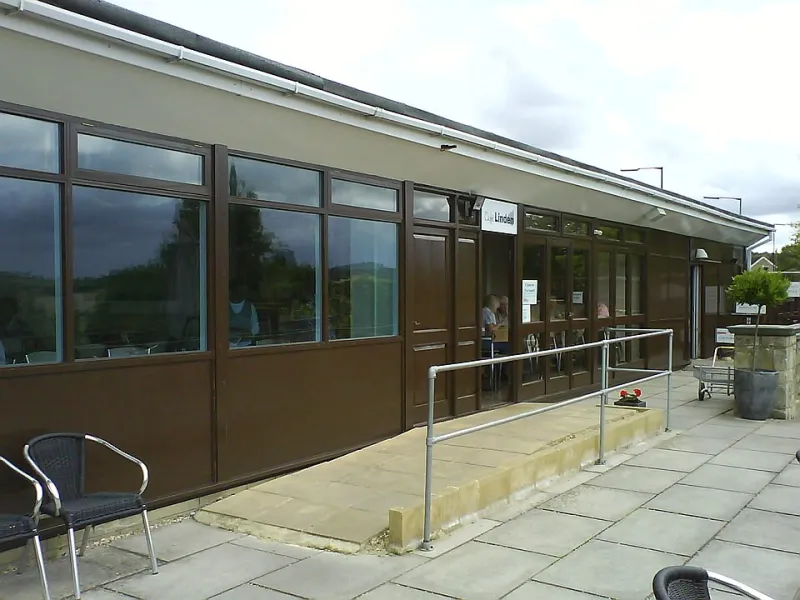
Photo: Steve Daniels , CC BY-SA 2.0, via Wikimedia Commons
There is a particular kind of British afternoon that begins in a car park smelling faintly of compost and ends with a scone crumb down your coat. In between sits the garden centre café: a room of wipe-clean tables, laminated menus and the low, steady hum of other people's conversations. I love it more than I can reasonably justify, and I think it's time we said so out loud.
We have spent a decade being told that good lunch looks a certain way. Small plates, exposed brick, a menu printed that morning on textured card. And some of that is lovely. But there is another tradition running quietly alongside it, one where the soup comes with a wedge of brown bread and nobody minds if you sit for ninety minutes with a pot of tea going cold in front of you.
The car park is the first clue
You can tell a lot about a garden centre café before you reach the door. If the car park has a decent spread of hatchbacks, a couple of muddy estate cars and one person carefully loading a olive tree into a boot, you're in good hands. There is no queue anxiety, no booking system, no hurried table turn. You simply walk in, hover near the till and someone points at a table near the window.
That absence of performance is the whole appeal. Nobody is filming their lunch. Nobody has asked the kitchen to make anything deconstructed. It is lunch as it was always meant to be: functional, warm, and quietly generous.
Soup of the day, and the case for the ladle
The soup is the beating heart of the operation, and I will hear no argument. It arrives in a white bowl with a proper saucer underneath, and it is almost always one of three things: leek and potato, tomato and basil, or something involving butternut squash and a hopeful swirl of cream.
What makes it work is not culinary ambition but consistency. It is hot. It is thick enough to hold a spoon upright. There is a bread roll, or a slice of granary, or a cheese scone if you've been clever about it. On a raw November day, after forty minutes of browsing shrubs you have no intention of buying, that bowl is worth more than a plate of something fashionable costing twice as much.
And crucially, the soup changes. There's a chalkboard. Somebody in that kitchen is paying attention to what's in season and what's left over, and the result is a daily rhythm you can set your watch by.
The scone protocol
The scone deserves its own paragraph, because garden centre cafés are among the last places that take it seriously. It should be large but not boulder-like, warm but not microwaved to lava, and served with a small pot of jam and a proper dollop of clotted cream or thick butter.
There is a protocol. You cut it, you apply cream first, then jam — or jam first, then cream, if you're from the other camp and we're being polite about it. You eat it over the plate, not over your lap. You accept that the last bite will be mostly crumb and that this is part of the experience.
The scone is also the great equaliser. Retired couples order them. Toddlers demolish them. Somebody's dad has one with a cup of builder's tea and looks completely at peace. It's a democratising piece of baking, and the garden centre does it better than most places with a pastry chef on the payroll.
A pot of tea, not a cup
The pot matters. A cup is a drink; a pot is an occasion. The garden centre café understands that lunch here is not a transaction but a stretch of time, and a pot of tea for one and a half is precisely the right amount of liquid for a long chat about a neighbour's extension.
The tea itself is usually a familiar brand, brewed properly, and arrives with a small jug of milk and a saucer of sugar sachets that nobody under sixty uses. It is not a rare leaf. It is perfect anyway.
Yes, the menu is too big. That's the point.
Every garden centre café menu is roughly four times longer than any kitchen could plausibly execute well. Jacket potatoes, all-day breakfasts, paninis, fish and chips, three kinds of salad, a roast on Sundays, a children's menu with a slightly sad-looking picture of a smiling tomato.
And yet this is not a flaw. It is the entire premise. You are catering to a party that includes a vegetarian aunt, a nine-year-old who will only eat beige food, and a grandfather who believes a meal without chips is a snack. A short, sharp menu would fail all three. The sprawling laminated one gets everybody fed, and gets them fed at roughly the same time, which is a minor miracle of logistics.
The bill, and what it buys you
The other day I paid less for two soups, a scone and a pot of tea than I did for a single flat white and a pastry in town the week before. That's not a fair fight. One is a small pleasure; the other is lunch.
Value here isn't just cheapness — it's the whole package. Free parking. No rush. Tables far enough apart to have a conversation. A toilet that's clean and easy to find. Somewhere to leave a pushchair. The garden centre café quietly solves a dozen problems that trendier brunch spots never even think about.
People-watching among the poinsettias
And then there's the entertainment, which is free and excellent. In mid-November the Christmas displays are going up, so you get a man in a fleece carefully negotiating a nine-foot artificial tree past a display of garden gnomes while his wife says "not that one" for the fourth time.
You get the two friends who have clearly been coming every Tuesday for years. You get the family who are here because it's somebody's birthday and the restaurant they wanted was fully booked. You get the quiet person with a notebook and a pot of tea, which has been me on more than one occasion.
It is unhurried, unpretentious and entirely unbothered by what anyone else is doing. For a certain kind of afternoon, that's worth more than any reservation.
Go without an agenda
The next time you're near a garden centre with a café, go in. Order the soup. Ask what the scone situation is. Get the pot, not the cup. Sit by the window and watch the trolleys go by.
You won't be dazzled, and that's rather the point. You'll be fed, warmed, and quietly looked after — and in a country that still hasn't quite worked out how to do a relaxed lunch, that's an achievement worth celebrating.